

Expert Brake Repair & Maintenance Services in Islamabad
Your brakes are the most critical safety system in your vehicle. When they’re not working properly – whether it’s squealing noises, soft pedal feel, grinding sounds, or warning lights – you need immediate attention from experts who take brake safety seriously.
At Auto Surgeon Workshop, we don’t cut corners on brake work. We perform thorough inspections, use quality parts, follow proper procedures, and test extensively before returning your vehicle. Your safety and your family’s safety depend on properly functioning brakes – that’s not something we take lightly.
From routine brake pad replacement to complete brake system overhauls, ABS repairs, and brake fluid service, we handle all aspects of brake maintenance and repair with the professionalism and expertise your safety demands.
Hearing grinding noises? Pedal feels soft? Don’t wait – brake problems only get worse and more dangerous.
📞 Call Now: +92 342 9810577| 📅 Book Appointment | 💬 WhatsApp Us
Understanding Your Brake System
Modern brake systems are sophisticated networks of components working together to stop your vehicle safely:
Main Brake Components:
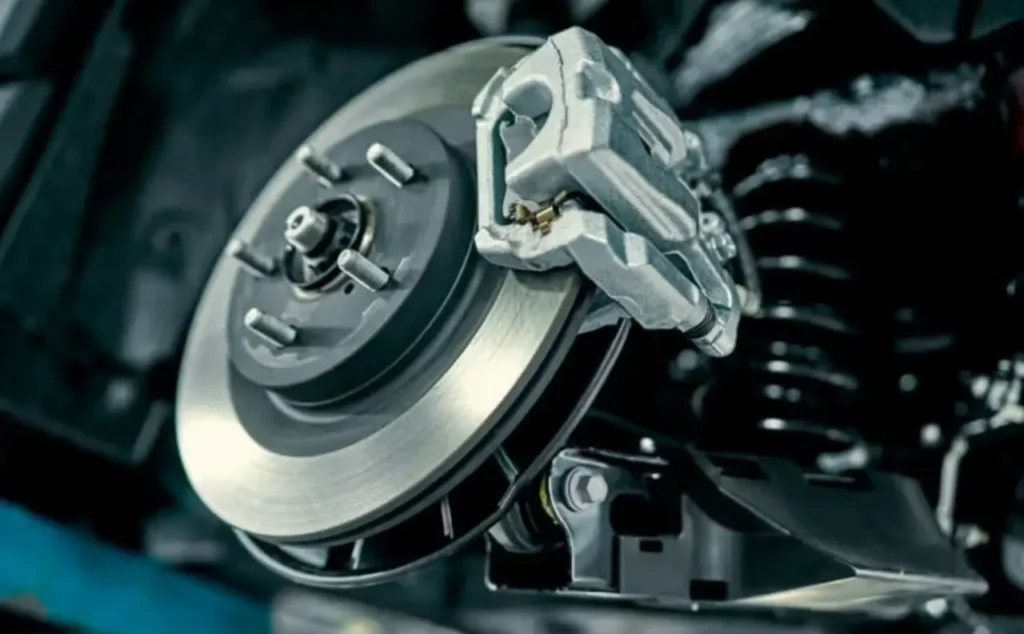
Brake Pads/Shoes:
- Friction material that presses against rotors/drums
- Wear out gradually through use
- Need replacement every 30,000-70,000 km depending on driving
- Different materials (ceramic, semi-metallic, organic)
Brake Rotors/Drums:
- Metal discs (rotors) or drums that pads/shoes press against
- Can warp, crack, or wear down over time
- Sometimes can be resurfaced, sometimes need replacement
- Critical for proper stopping power
Brake Calipers:
- Hydraulic clamps that squeeze brake pads against rotors
- Contain pistons that push pads
- Can seize, leak, or fail
- Must slide freely for even pad wear
Brake Fluid:
- Hydraulic fluid that transfers pedal pressure to brakes
- Absorbs moisture over time (reduces effectiveness)
- Should be replaced every 2-3 years
- DOT 3, DOT 4, or DOT 5.1 specifications
Master Cylinder:
- Converts pedal pressure to hydraulic pressure
- Distributes brake fluid to all wheels
- Contains reservoir for brake fluid
- Failure causes complete brake loss
Brake Lines & Hoses:
- Carry brake fluid throughout system
- Metal lines can corrode and leak
- Rubber hoses can crack or bulge
- Any leak is dangerous
ABS (Anti-lock Brake System):
- Prevents wheel lockup during hard braking
- Modulates brake pressure electronically
- Includes wheel speed sensors, hydraulic unit, and control module
- Allows steering while braking hard
Parking/Emergency Brake:
- Mechanical brake independent of hydraulic system
- Usually operates rear brakes via cable
- Must be functional for safety and parking on hills
Warning Signs You Need Brake Service
Immediate Danger Signs (Stop Driving!):
- ⚠️ Brake pedal goes to floor
- ⚠️ Complete loss of brakes
- ⚠️ Brake fluid leak (puddle under car)
- ⚠️ Severe grinding metal-on-metal noise
- ⚠️ Smoke or burning smell from wheels
- ⚠️ Vehicle pulls hard to one side when braking
If you experience any of these, do NOT drive. Call us for towing advice.
Urgent Issues (Schedule Service Immediately):
- 🔴 Grinding or scraping noises when braking
- 🔴 Soft or spongy brake pedal
- 🔴 Pedal vibrates or pulsates
- 🔴 Brake warning light illuminated
- 🔴 ABS warning light on
- 🔴 Parking brake light stays on
- 🔴 Burning smell after braking
- 🔴 Vehicle pulls to one side when braking
Schedule Service Soon:
- 🟡 Squealing or squeaking noises
- 🟡 Brakes feel less responsive
- 🟡 Brake pedal feels lower than usual
- 🟡 Longer stopping distances
- 🟡 Brake pedal feels harder than normal
- 🟡 Parking brake doesn’t hold well
- 🟡 Visible brake pad wear (through wheel spokes)
Normal Maintenance Indicators:
- 🟢 Over 40,000 km since last brake service
- 🟢 Brake fluid is dark or contaminated
- 🟢 Scheduled service interval reached
- 🟢 Pre-trip inspection before long journey
Don’t ignore brake warning signs. What starts as a $8,000 pad replacement can become a $40,000 rotor and caliper job if neglected.
Our Brake Services
1. Complete Brake Inspection
What We Check:
Visual Inspection:
- Brake pad thickness (remaining life)
- Rotor/drum condition and thickness
- Brake lines and hoses for damage or leaks
- Caliper condition and operation
- Wheel cylinders (drum brakes)
- Parking brake cable condition
- Brake fluid level and condition
Measurement:
- Precise pad thickness measurements
- Rotor thickness with micrometer
- Rotor runout (warping) measurement
- Brake fluid contamination test
- Parking brake adjustment check
Functional Testing:
- Brake pedal feel and travel
- ABS system operation
- Parking brake holding capacity
- Even braking (no pulling)
- Brake booster function
Our Inspection Report Includes:
- Photo documentation of brake condition
- Remaining brake pad life percentage
- Measurements of all critical components
- Immediate concerns vs. future items
- Detailed cost estimate for needed work
- Priority ranking of repairs
Computer Diagnostics:
- ABS system codes and faults
- Wheel speed sensor operation
- Brake pressure sensor readings
- Electronic parking brake status
2. Brake Pad Replacement
When Do Brake Pads Need Replacement?
Brake pads should be replaced when:
- Less than 3mm of friction material remains
- Wear indicator starts squealing
- Uneven wear pattern develops
- Contaminated with oil or brake fluid
- Cracked or damaged
Our Brake Pad Service Process:
Step 1: Pre-Service Inspection
- Measure pad thickness precisely
- Check rotor condition and thickness
- Inspect calipers for proper operation
- Test brake fluid condition
Step 2: Proper Removal
- Safely lift and support vehicle
- Remove wheels for access
- Compress caliper piston properly
- Remove old pads and hardware
Step 3: Component Service
- Clean caliper slides and bracket
- Lubricate slide pins with high-temp grease
- Inspect and replace hardware clips
- Check caliper piston for leaks or damage
- Clean rotor surface
Step 4: Install New Pads
- Install quality brake pads
- Replace anti-rattle clips and shims
- Ensure proper fitment
- Compress pistons carefully
Step 5: Reassembly & Bedding
- Reinstall calipers with proper torque
- Pump brake pedal to seat pads
- Test pedal feel before driving
- Perform bedding procedure (gentle stops to transfer pad material to rotor)
Step 6: Final Testing
- Test drive with various braking scenarios
- Verify no noise or vibration
- Check for pulling or uneven braking
- Ensure proper pedal feel
Brake Pad Types We Install:
Ceramic Pads:
- Pros: Quietest, least dust, long-lasting
- Cons: More expensive, less effective when cold
- Best for: Daily drivers, luxury vehicles, those who want quiet brakes
Semi-Metallic Pads:
- Pros: Excellent stopping power, work well in all conditions
- Cons: More noise, more brake dust
- Best for: Performance driving, heavy vehicles, towing
Organic/NAO Pads:
- Pros: Quiet, softer on rotors
- Cons: Wear faster, more dust
- Best for: Light use, economy vehicles
We’ll recommend the best pad type for your driving style and vehicle.
3. Brake Rotor Service (Resurfacing or Replacement)
When Do Rotors Need Service?
Rotors may need attention when:
- Below minimum thickness specification
- Warped (causing pedal vibration)
- Grooved or scored deeply
- Cracked or heat damaged
- Rusted or corroded excessively
Rotor Resurfacing (Machining):
If rotors are above minimum thickness and not cracked:
- Machine both surfaces smooth and parallel
- Remove glazing, grooves, and irregularities
- Restore flat, smooth braking surface
- Less expensive than replacement
When Appropriate: Rotors above minimum thickness with minor issues
Rotor Replacement:
When rotors are below minimum thickness or damaged:
- Remove old rotors
- Install new or premium rotors
- Proper bedding procedure
- Better stopping power than worn rotors
Rotor Types:
OEM Quality Rotors:
- Pros: Match original specifications exactly
- Cons: Most expensive option
Premium Aftermarket:
- Pros: Good quality, better value than OEM
- Cons: Must verify fitment carefully
Economy Rotors:
- Pros: Least expensive
- Cons: May not last as long, quality varies
Performance Rotors (Slotted/Drilled):
- Pros: Better heat dissipation, less brake fade
- Cons: More expensive, can be noisier
- Best for: Performance driving, mountain driving
Our Recommendation: We typically recommend premium aftermarket rotors for best value.
4. Brake Caliper Service & Replacement
Caliper Problems:
Seized Caliper:
- Causes one brake to drag constantly
- Reduced fuel economy
- Uneven brake pad wear
- Can cause brake fire in extreme cases
Leaking Caliper:
- Brake fluid leak at piston seal
- Soft brake pedal
- Requires brake bleeding
- Eventually causes brake failure
Stuck Slide Pins:
- Caliper doesn’t slide properly
- Uneven pad wear (inside pad worn, outside pad fine)
- Reduced braking effectiveness
Our Caliper Service:
Caliper Rebuild (When Possible):
- Disassemble caliper
- Replace piston seals and boots
- Clean and inspect pistons
- Replace any damaged parts
- Reassemble and test
Caliper Replacement (When Necessary):
- Remove seized or damaged caliper
- Install new or remanufactured caliper
- Bleed brake system
- Test operation thoroughly
Slide Pin Service:
- Clean slide pins and bores
- Replace damaged pins or boots
- Lubricate with high-temp grease
- Verify free movement
- Cost: Usually included with brake pad service
5. Brake Fluid Service (Flush & Replacement)
Why Brake Fluid Service Matters:
Brake fluid is hygroscopic (absorbs moisture from air):
- Fresh brake fluid: 3-4% water content
- After 2 years: Can reach 8-10% water
- Water lowers boiling point dramatically
- Can cause vapor lock (complete brake failure)
- Corrodes brake system components from inside
Our Brake Fluid Service:
Complete System Flush:
- Remove old contaminated fluid from entire system
- Clean reservoir
- Flush all brake lines
- Fill with fresh DOT 3/4 fluid
- Bleed all wheels properly
- Test pedal feel
- Check for leaks
Benefits:
- Restored brake pedal feel
- Maximum braking performance
- Prevents internal corrosion
- Extends brake component life
- Maintains ABS system health
Recommended Interval: Every 2-3 years or 40,000 km
Note: We use DOT 3 or DOT 4 fluid depending on your vehicle’s requirements. Never mix DOT 5 (silicone) with DOT 3/4.
6. ABS (Anti-lock Brake System) Service
What is ABS?
ABS prevents wheel lockup during hard braking by:
- Monitoring wheel speed with sensors
- Detecting when a wheel is about to lock
- Rapidly modulating brake pressure
- Allowing you to steer while braking hard
ABS Warning Light Causes:
Wheel Speed Sensors:
- Most common ABS problem
- Dirt, rust, or damage prevents operation
- Located at each wheel hub
ABS Module/Pump:
- Hydraulic unit that modulates brake pressure
- Can fail internally or have valve problems
- Often repairable, sometimes needs replacement
Wiring Issues:
- Damaged wires to sensors
- Corroded connections
- Chafed insulation
Tone Ring Damage:
- Ring on CV axle or hub that sensor reads
- Can break or corrode
Our ABS Diagnostic Process:
- Scan for ABS codes – Identify which component has fault
- Test wheel speed sensors – Verify proper signal
- Inspect wiring and connectors – Look for damage
- Check tone rings – Verify condition
- Test ABS module – If other components check out
- Provide repair options – With detailed estimate
7. Parking Brake Service
Parking Brake Problems:
Won’t Hold:
- Stretched cable
- Worn shoes (if separate from service brakes)
- Adjustment needed
- Broken cable
Stuck On:
- Seized cable
- Frozen mechanism
- Broken return spring
- Requires disassembly and repair
Warning Light Stays On:
- Switch problem
- Low brake fluid
- Parking brake not fully releasing
Our Parking Brake Service:
Inspection:
- Test holding capacity on incline
- Check cable condition and adjustment
- Inspect rear brake shoes (if separate system)
- Verify switch operation
Adjustment:
- Proper cable tension adjustment
- Ensure even operation both sides
- Verify full release
Cable Replacement:
- Remove old seized or stretched cables
- Install new cables
- Adjust properly
8. Complete Brake System Overhaul
When is Complete Overhaul Needed?
If your brake system has been severely neglected:
- Multiple components failed
- Brake fluid contaminated throughout
- Extensive corrosion in lines
- Vehicle hasn’t been driven for long period
Complete Overhaul Includes:
- Replace all brake pads
- Replace or resurface all rotors
- Rebuild or replace all calipers
- Replace all brake fluid
- Inspect and replace brake lines if needed
- Clean or replace master cylinder
- Service parking brake
- Test and adjust everything
- Comprehensive post-service testing
This is rare but sometimes necessary for very neglected vehicles or restoration projects.
Brake Service for Different Vehicle Types
Economy Cars (Alto, Cultus, Mehran)
- Common Service: Drum brake rear, disc front
- Typical Service Interval: 35,000 – 50,000 km
- Special Considerations: Drum brake adjustments important
Sedans (Corolla, Civic, City)
- Common Service: 4-wheel disc brakes
- Typical Service Interval: 40,000 – 60,000 km
- Special Considerations: Aluminum calipers can seize
SUVs & Pickups (Land Cruiser, Fortuner, Hilux)
- Common Service: Larger brakes, more demanding
- Typical Service Interval: 30,000 – 50,000 km (heavier wear)
- Special Considerations: Need heavy-duty pads for towing
Luxury Vehicles (BMW, Mercedes, Audi)
- Common Service: Advanced systems, expensive parts
- Typical Service Interval: 40,000 – 60,000 km
- Special Considerations: Electronic parking brake, brake pad sensors
Hybrid Vehicles (Prius, Vezel, Aqua)
- Common Service: Regenerative braking affects wear
- Typical Service Interval: 60,000 – 80,000 km (brakes last longer)
- Special Considerations: Brake actuator can be expensive to repair
Brake Maintenance & Safety Tips
Make Your Brakes Last Longer:
1. Smooth Driving Habits
- Anticipate stops and brake gradually
- Avoid hard, sudden braking
- Don’t ride the brake pedal
- Coast to slow down when possible
2. Proper Break-in Procedure
- After new pad installation, follow bedding procedure
- First 500 km: avoid hard braking
- Make several gentle stops to transfer pad material to rotor
- Improves pad life and stopping power
3. Regular Inspections
- Visual inspection every few months
- Listen for new noises
- Feel for changes in pedal
- Annual professional inspection
4. Brake Fluid Maintenance
- Replace every 2-3 years
- Check level monthly
- Keep cap sealed to prevent moisture absorption
- Use only specified fluid type
5. Avoid Overloading
- Don’t exceed vehicle weight capacity
- Heavy loads stress brakes
- More frequent maintenance if towing regularly
6. Mountain Driving Technique
- Use lower gears on descents
- Don’t ride brakes constantly
- Let brakes cool periodically
- Check brakes before and after mountain trips
7. Address Issues Promptly
- Don’t ignore squealing or grinding
- Fix small problems before they become big ones
- Warning lights need immediate attention
- Pulling or vibration needs diagnosis
Understanding Brake Noises
Squealing:
- Light squealing: Usually wear indicators saying pads are low
- High-pitched squeal: Glazed pads or dust buildup
- Action: Inspection needed soon
Grinding:
- Metal-on-metal sound: Pads completely worn, damaging rotors
- Action: URGENT – stop driving, schedule immediate service
- Cost Impact: Grinding increases repair cost 3-4x
Clicking:
- When applying brakes: Loose brake pads or hardware
- When driving over bumps: Possible suspension issue
- Action: Inspection to identify source
Squeaking:
- Light squeaking (especially in morning): Often normal, just surface rust
- Constant squeaking: May need brake cleaning or hardware replacement
- Action: Monitor; if persistent, get inspected
Groaning:
- Low groaning when braking: Caliper slide pin issue or pad material
- Action: Service needed, not urgent but schedule soon
Rubbing:
- Constant rubbing sound: Stuck caliper or dragging brake
- Action: Urgent – causes excessive wear and heat
Clunking:
- When braking or accelerating: Possibly caliper or suspension related
- Action: Diagnosis needed to identify cause
Hissing:
- When pressing brake pedal: Brake booster vacuum leak
- Action: Needs service; affects pedal feel
Common Brake Problems Explained
Soft or Spongy Pedal
Causes:
- Air in brake lines (most common)
- Brake fluid leak
- Worn master cylinder
- Flexible brake hose expansion
Solution: Brake bleeding, leak repair, or master cylinder replacement
Pedal Goes to Floor
Causes:
- Severe brake fluid leak
- Master cylinder failure
- Rear brake adjuster issue (drum brakes)
Solution: EMERGENCY – don’t drive. Leak repair or master cylinder replacement
Brake Pedal Vibration (Pulsating)
Causes:
- Warped rotors (most common)
- Wheel bearing wear
- Suspension problems
- Tire issues
Solution: Rotor resurfacing or replacement
Vehicle Pulls to One Side
Causes:
- Seized caliper on one side
- Contaminated pad on one side
- Uneven pad wear
- Tire pressure difference
Solution: Caliper service, pad replacement, or inspection to determine cause
Hard Brake Pedal (Requires More Pressure)
Causes:
- Brake booster failure
- Vacuum hose leak
- Contaminated or wrong brake fluid
Solution: Brake booster replacement or vacuum system repair
Brakes Grab or Lock Up
Causes:
- Contaminated pads
- Seized caliper
- ABS malfunction
- Brake proportioning valve issue
Solution: Depends on cause; may need caliper service, pad replacement, or ABS repair
Brake Service Pricing Guide
Inspection & Diagnostics:
- Visual brake inspection: FREE with service
- Comprehensive brake inspection
- ABS diagnostics
Brake Pads:
- Economy pads (installed)
- Premium pads (installed)
- Ceramic pads (installed)
Brake Rotors:
- Rotor resurfacing
- Economy rotors (installed)
- Premium rotors (installed)
- Performance rotors
Calipers:
- Caliper slide pin service: Usually included with pad service
- Caliper rebuild
- Caliper replacement
Fluid Service:
- Brake fluid flush
ABS Components:
- Wheel speed sensor
- ABS module repair/replacement
Parking Brake:
- Adjustment
- Cable replacement
Master Cylinder:
- Replacement
Brake Lines:
- Single line replacement
- Complete line set
Prices vary by vehicle make and model. Estimates provided before work begins.
Frequently Asked Questions
Q: How often should I replace brake pads?
A: Depends on driving conditions:
- City driving: 30,000 – 50,000 km
- Highway driving: 50,000 – 70,000 km
- Aggressive driving: 20,000 – 40,000 km Schedule inspection at 30,000 km to assess condition.
Q: Why do my brakes squeal?
A: Common causes:
- Wear indicators (metal tab touching rotor = time for pads)
- Dust or debris
- Glazed pads
- Cheap pads with metallic content
- Normal moisture (especially in morning) Get inspected to determine if it’s normal or requires service.
Q: Can I drive with grinding brakes?
A: NO. Grinding means:
- Pads completely worn out
- Metal backing plate grinding rotor
- Damaging rotors (expensive)
- Severely reduced stopping ability
- Dangerous safety issue Stop driving and call for service immediately.
Q: How do I know if my rotors need replacement?
A: Rotors need replacement when:
- Below minimum thickness specification
- Warped beyond spec (causing vibration)
- Cracked or heat damaged
- Grooved too deeply to resurface We measure and advise during inspection.
Q: Should I replace all four brake pads at once?
A: Not necessarily:
- Replace by axle (both fronts or both rears together)
- Front and rear wear at different rates
- Fronts typically wear 2-3x faster than rears
- Replacing only fronts is normal and acceptable
Q: What is brake fluid flush and do I need it?
A: Brake fluid flush removes old contaminated fluid and replaces with fresh fluid. You need it because:
- Fluid absorbs moisture over time
- Water lowers boiling point (brake failure risk)
- Causes internal corrosion
- Recommended every 2-3 years
Q: Why does my brake pedal vibrate?
A: Usually warped rotors caused by:
- Hard braking (especially when hot)
- Uneven cooling
- Incorrect wheel torque
- Age and wear Fixed by resurfacing or replacing rotors.
Q: Are expensive brake pads worth it?
A: Depends on priorities:
- Premium/ceramic: Quieter, less dust, last longer – worth it for most people
- Economy: Adequate for light use, save money upfront
- Performance: Better stopping, required for aggressive driving We’ll recommend based on your needs.
Q: Can I just replace brake pads without rotors?
A: Usually yes, if rotors are:
- Above minimum thickness
- Not warped or damaged
- Relatively smooth We measure and advise. Often pads-only is fine.
Q: What’s the difference between DOT 3 and DOT 4 brake fluid?
A:
- DOT 3: Lower boiling point, adequate for most vehicles
- DOT 4: Higher boiling point, better for performance or heavy use
- Never mix types or use wrong spec for your vehicle We use the correct fluid for your vehicle.
Q: Do you offer warranty on brake work?
A: Yes:
- Labor: 12 months
- Parts: 12 months on pads, rotors, calipers
- Warranty details provided with invoice
Emergency Brake Service
Brake Emergency? We Can Help:
✅ Same-day service for urgent brake issues ✅ Open 24/7 including holidays ✅ We’ll tell you if it’s safe to drive in ✅ Emergency appointments available ✅ Honest assessment of urgency
If you have brake problems:
- Assess safety – can you stop adequately?
- If safe, drive carefully to our workshop
- If unsafe, don’t drive – call us: 0342-9810577
- We’ll advise next steps
Signs you should NOT drive:
- Brake pedal goes to floor
- Complete loss of braking
- Severe grinding with minimal stopping
- Brake fluid leak
- Smoke from wheels
Book Your Brake Service Appointment
Your brakes are too important to ignore. Whether you need routine maintenance, have warning lights, or are experiencing problems, professional brake service ensures your safety on the road.
📞 Call: 0342-9810577 📧 Email: info@auto-surgeon.com 📍 Location: Shop No: 81, Street 4, Auto Market I-10/3, Islamabad ⏰ Hours: Open 24/7 – 365 Days
[Book Brake Service] | [WhatsApp Us] | [Get Directions]
Our Brake Service Promise
When you trust Auto Surgeon Workshop with your brake system:
✅ Safety First – No shortcuts, ever ✅ Quality Parts – OEM or premium aftermarket ✅ Proper Procedures – Following manufacturer specifications ✅ Thorough Testing – Extensive post-service verification ✅ Honest Recommendations – Only necessary work ✅ Fair Pricing – Transparent estimates ✅ Warranty Coverage – 12 months on parts and labor
Your safety is our highest priority. We take brake service seriously because your life depends on it.